





Colon cancer, also known as colorectal cancer, is one of the most common cancers affecting both men and women worldwide. While it often develops slowly over several years, understanding the common risk factors for colon cancer can help you take preventive steps and detect the disease early. Early diagnosis significantly improves treatment outcomes and survival rates.
What is Colon Cancer?
Colon cancer begins in the large intestine (colon), which is the final part of the digestive system. It usually starts as small, non-cancerous growths called polyps that can gradually become cancerous if left untreated.
Routine screening helps identify and remove these polyps before they develop into cancer, making early detection one of the most effective ways to prevent the disease.
Common Risk Factors for Colon Cancer
Understanding what increases your risk is the first step toward prevention.
1. Age Above 45 Years
Although colon cancer can occur at any age, the risk increases significantly after the age of 45. This is why most healthcare professionals recommend regular colorectal cancer screening beginning at age 45 for individuals at average risk.
2. Family History of Colon Cancer
If a close family member, such as a parent, sibling, or child, has been diagnosed with colon cancer or advanced polyps, your risk is considerably higher.
Inherited conditions like Lynch syndrome or Familial Adenomatous Polyposis (FAP) also increase the likelihood of developing colorectal cancer.
3. Personal History of Polyps or Colorectal Cancer
People who have previously had colon polyps or colorectal cancer are at greater risk of developing the disease again. Regular follow-up colonoscopies are essential for ongoing monitoring.
4. Inflammatory Bowel Disease (IBD)
Long-term inflammatory bowel diseases such as ulcerative colitis and Crohn’s disease increase the risk of colon cancer due to chronic inflammation of the colon lining.
5. Unhealthy Diet
A diet high in processed meats, red meat, fried foods, and low in fruits, vegetables, and whole grains can increase colon cancer risk.
Foods lacking dietary fiber may also contribute to digestive issues and poor colon health.
6. Obesity
Being overweight or obese increases the risk of developing colon cancer. Excess body fat may lead to hormonal and metabolic changes that promote cancer growth.
7. Physical Inactivity
A sedentary lifestyle slows digestion and contributes to obesity, increasing the likelihood of colorectal cancer.
Regular physical activity supports healthy bowel function and lowers cancer risk.
8. Smoking
Tobacco use exposes the body to harmful chemicals that can damage DNA and increase the risk of several cancers, including colon cancer.
Long-term smokers are more likely to develop larger and more aggressive colon polyps.
9. Excessive Alcohol Consumption
Heavy alcohol intake has been linked to an increased risk of colorectal cancer. Limiting alcohol consumption can help reduce this risk.
10. Type 2 Diabetes
People with Type 2 diabetes have a higher chance of developing colon cancer, especially when diabetes is poorly controlled.
Early Warning Signs of Colon Cancer
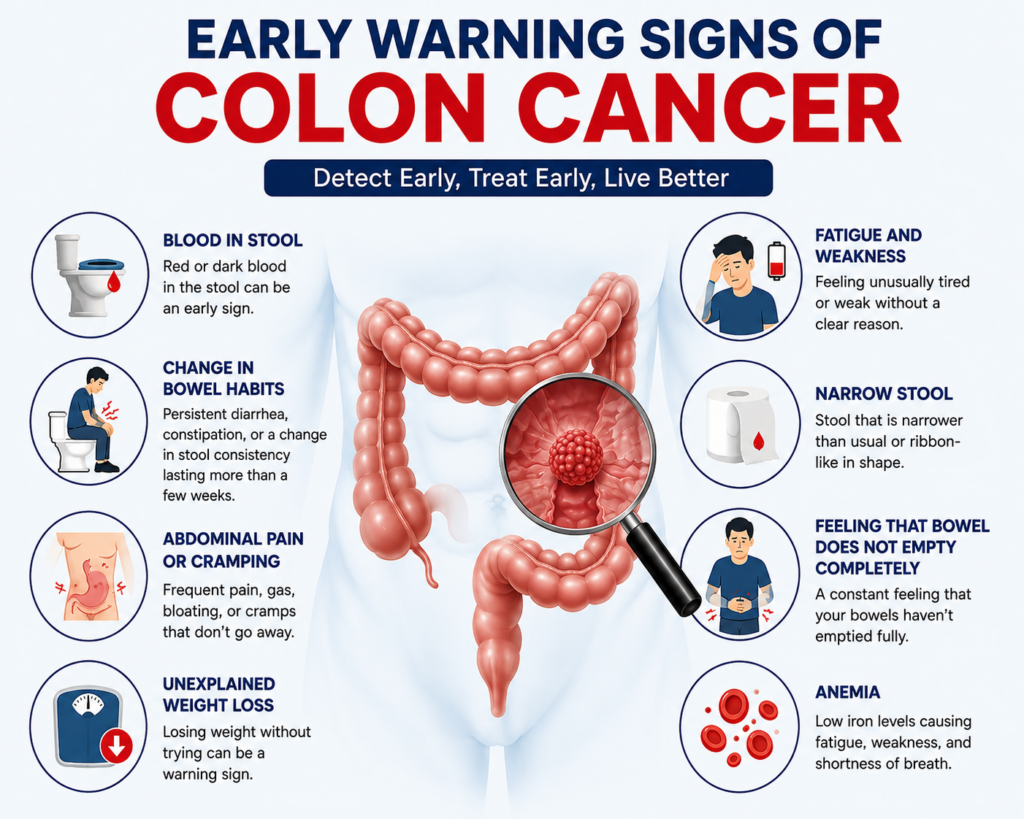
Colon cancer may not cause symptoms during its early stages. As the disease progresses, common symptoms may include:
- Blood in the stool
- Persistent constipation or diarrhea
- Changes in bowel habits lasting more than a few weeks
- Unexplained weight loss
- Abdominal pain or cramping
- Fatigue and weakness
- Feeling that the bowel does not empty completely
If you experience any of these symptoms, seek medical evaluation promptly.
How to Protect Yourself from Colon Cancer
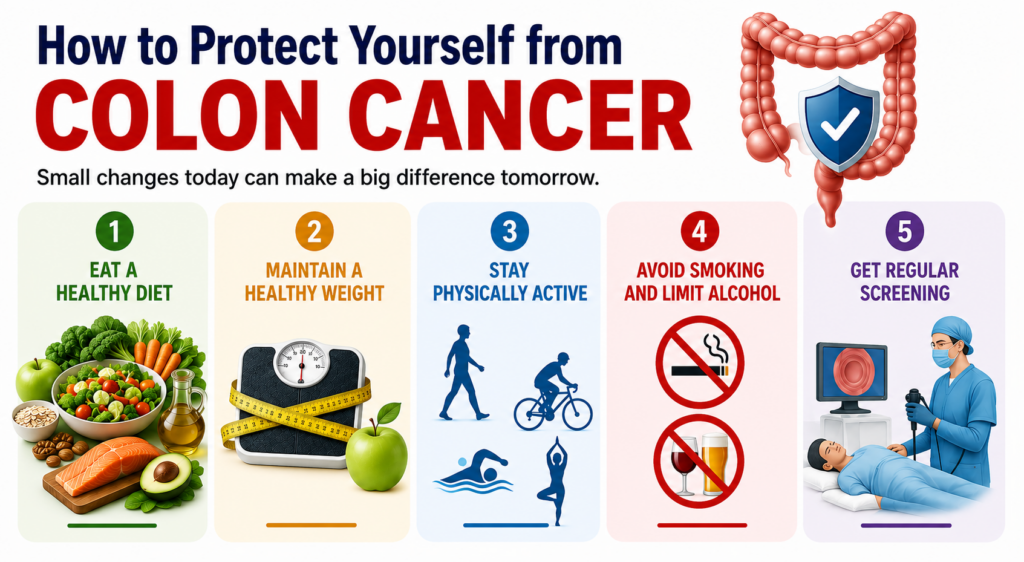
Fortunately, many colon cancer risk factors can be managed through healthy habits and regular medical care.
Eat a Healthy Diet
Focus on:
- Fresh fruits and vegetables
- Whole grains
- High-fiber foods
- Lean proteins
- Healthy fats
Reduce your intake of processed meats, sugary foods, and saturated fats.
Maintain a Healthy Weight
Keeping your body weight within a healthy range lowers inflammation and reduces cancer risk.
Stay Physically Active
Aim for at least 150 minutes of moderate exercise every week. Walking, cycling, swimming, and yoga all contribute to better digestive health.
Avoid Smoking and Limit Alcohol
Quitting smoking and reducing alcohol intake provide significant health benefits beyond lowering colon cancer risk.
Get Regular Screening
Screening tests such as colonoscopy can detect polyps before they become cancerous.
You may need earlier or more frequent screening if you have:
- Family history of colon cancer
- Inflammatory bowel disease
- Previous colon polyps
- Genetic syndromes
Always discuss your screening schedule with your healthcare provider.
Importance of Early Detection
Early-stage colon cancer often has no noticeable symptoms, making regular screening extremely important.
When detected early:
- Treatment is less invasive.
- Survival rates are significantly higher.
- Polyps can be removed before cancer develops.
- Better quality of life is maintained.
Do not wait for symptoms before considering screening, especially if you have one or more risk factors.
Frequently Asked Questions (FAQs)
1. What is the biggest risk factor for colon cancer?
Age over 45 and a family history of colorectal cancer are among the strongest risk factors. Lifestyle habits such as smoking, obesity, and poor diet also increase risk.
2. Can colon cancer be prevented?
While not all cases can be prevented, maintaining a healthy lifestyle, avoiding tobacco, limiting alcohol, eating a high-fiber diet, and getting regular screenings greatly reduce the risk.
3. At what age should colon cancer screening begin?
Most adults at average risk should begin screening at age 45. Those with a family history or other high-risk conditions may need screening earlier.
4. Does colon cancer always cause symptoms?
No. Early colon cancer often develops without noticeable symptoms. This is why regular screening is essential.
Dr. Ashish Pokharkar – Colon Cancer Specialist in Pimpri Chinchwad (PCMC)
Protect your health with expert guidance and advanced colorectal care. Dr. Ashish Pokharkar specializes in the diagnosis, screening, and treatment of colon cancer, offering personalized care tailored to every patient’s needs.
Book your appointment Today
