




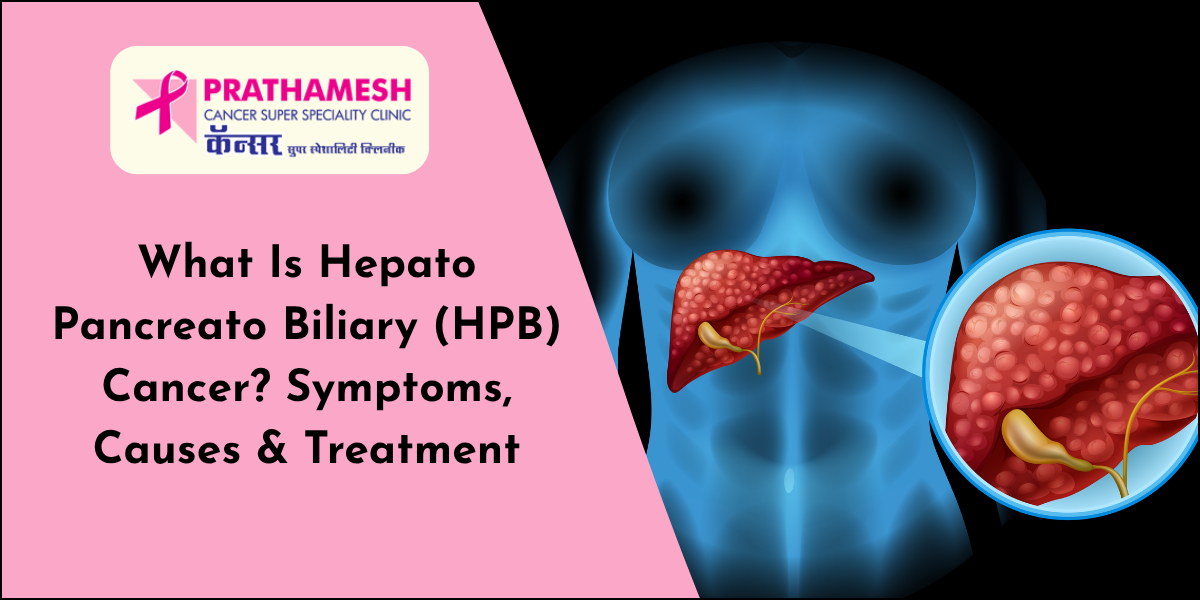
The liver, pancreas, gallbladder and bile ducts sit close together in the upper abdomen and work as a team to digest food and clear waste from the body. When cancer develops in any of these organs, doctors group it under one umbrella term: Hepato Pancreato Biliary (HPB) cancer. These cancers are often picked up late, because the early signs are quiet or easily mistaken for ordinary digestive trouble. That is exactly why understanding them early can make such a difference.
What Is Hepato Pancreato Biliary (HPB) Cancer?
HPB cancer is a group of cancers that affect the liver, pancreas, gallbladder and bile ducts. Because these organs are connected and share their blood supply and drainage, a tumour in one can quickly affect the others, so they are best managed by a dedicated HPB team.
Each organ plays a role in digestion. The liver filters blood and produces bile, the gallbladder stores that bile, the bile ducts carry it into the intestine, and the pancreas releases digestive enzymes and insulin. A tumour anywhere along this pathway can block the flow of bile and disturb digestion, which is why jaundice is such a frequent early clue. You can read more on the clinic’s HPB cancer surgery page.
What Are the Common Symptoms of HPB Cancer?
Early HPB cancer often causes no clear symptoms at all. As the tumour grows, the most common signs are yellowing of the skin and eyes, dark urine, pale stools, upper abdominal pain and unexplained weight loss.
Watch for these warning signs:
- Jaundice, a yellow tint to the skin and the whites of the eyes
- Dark urine along with pale, clay-coloured stools
- Pain or swelling in the upper abdomen
- Persistent itchy skin
- Loss of appetite and weight loss you cannot explain
- Nausea, vomiting or indigestion that will not settle
- Swelling in the legs and ankles
Many of these overlap with everyday stomach complaints. The simple rule is this: if a symptom lasts more than two weeks or keeps coming back, get it checked rather than waiting.
What Causes HPB Cancer? Causes and Risk Factors
HPB cancers rarely have a single cause. They usually develop from a mix of lifestyle, infection and inherited factors that slowly damage the liver, pancreas or bile ducts over many years.
Common risk factors include:
- Long-term hepatitis B or hepatitis C infection
- Cirrhosis, fatty liver disease and heavy alcohol use
- Smoking and other tobacco use
- Chronic pancreatitis and long-standing diabetes
- Gallstones and repeated gallbladder inflammation
- Obesity and a diet high in processed, fatty food
- A family history of these cancers or certain genetic conditions
- Age above 50
Having a risk factor does not mean you will develop cancer. It simply means regular check-ups and a healthier lifestyle are worth the effort.
What Are the Different Types of HPB Cancer?
The main types are liver cancer, pancreatic cancer, gallbladder cancer and bile duct cancer. Each behaves differently and needs its own treatment plan.
- Hepatocellular carcinoma, the most common form of liver cancer
- Pancreatic cancer, which tends to be aggressive and is often found late
- Gallbladder cancer, frequently linked to long-standing gallstones
- Cholangiocarcinoma, or bile duct cancer
How Is HPB Cancer Diagnosed?
HPB cancer is diagnosed through a combination of blood tests, imaging scans and a biopsy. Together these confirm the tumour, pinpoint its exact location and show whether it has spread, which guides the whole treatment plan.
Typical investigations include:
- Blood tests, including liver function tests and tumour markers such as CA 19-9, AFP and CEA
- Ultrasound of the abdomen as a first look
- CT scan and MRI, including MRCP to map the bile ducts
- Endoscopic ultrasound (EUS) and ERCP for a closer view
- PET scan to check the stage and spread
- A biopsy to confirm the diagnosis under the microscope
What Are the Treatment Options for HPB Cancer?
Treatment depends on which organ is affected, the stage of the cancer and the patient’s overall health. Surgery offers the best chance of a cure for early tumours, and it is often combined with other therapies for a stronger result.
Surgery
For cancers caught early, removing the tumour is the goal. This can involve complex procedures such as the Whipple operation for pancreatic tumours or a liver resection. Where suitable, these are done using minimally invasive laparoscopic and robotic techniques, which usually mean smaller cuts, less blood loss and a quicker recovery.
Chemotherapy
Anti-cancer drugs can shrink a tumour before surgery, or clear away remaining cancer cells afterwards. Chemotherapy is also used on its own when a tumour cannot be removed.
Radiation Therapy
High-energy beams target and destroy cancer cells in a precise area. Radiation is sometimes given together with chemotherapy, an approach known as chemoradiation, to boost the effect.
Advanced Treatment Approaches
Newer options such as targeted therapy and immunotherapy act on specific features of cancer cells. Interventional treatments like TACE, radiofrequency ablation and biliary stenting can also control the disease and relieve a blocked bile duct.
Why Early Diagnosis and an HPB Specialist Matter
HPB cancers are far more treatable when they are found early, while curative surgery is still possible. Seeing an experienced surgical oncologist quickly gives you the best shot at a good outcome and a smoother recovery.
Dr. Ashish B Pokharkar brings more than 22 years of experience in cancer surgery. He completed his MCh in surgical oncology at the prestigious Tata Memorial Hospital, Mumbai, followed by fellowship training in minimally invasive and robotic oncosurgery, and further robotic training at the Yonsei Cancer Institute in South Korea. He is one of the few surgeons in Pimpri Chinchwad (PCMC) who perform complex laparoscopic and robotic HPB surgeries, and he is known for an honest, evidence-based and empathic approach to every patient.
Frequently Asked Questions (FAQ)
1. Is HPB cancer curable?
Yes, many HPB cancers can be cured when found early and treated with surgery, often alongside chemotherapy or radiation. The earlier the diagnosis, the better the chances.
2. Which is the most common HPB cancer?
Liver cancer and pancreatic cancer are among the most common. Gallbladder and bile duct cancers are less frequent but need equally prompt care.
3. Can HPB cancer be treated without open surgery?
In many cases, yes. Suitable tumours can be removed using minimally invasive laparoscopic or robotic surgery, which means less pain and a faster recovery.
4.What tests help detect HPB cancer early?
Blood tests with tumour markers, an abdominal ultrasound, and CT or MRI scans are the usual first steps, followed by a biopsy to confirm the diagnosis.
Consult Dr. Ashish Pokharkar for Expert HPB Cancer Care
If you or a loved one is worried about Hepato Pancreato Biliary (HPB) cancer, do not wait for the symptoms to worsen. Early evaluation saves lives. Dr. Ashish Pokharkar offers expert diagnosis, second opinions and advanced surgical treatment for liver, pancreas, gallbladder and bile duct cancers in Pimpri Chinchwad (PCMC), Pune.
Book your appointment today for a clear, personalised evaluation and treatment plan.