



Hearing that you have a thyroid or adrenal tumour can feel unsettling. Many growths are not cancer. Others need careful checks, and some need an operation. Endocrine cancer surgery removes tumours that are cancerous, likely to become harmful, or already affecting hormone balance, while protecting nearby structures as much as possible.
What Is Endocrine Cancer Surgery?
The endocrine system is a network of glands that make hormones controlling metabolism, blood pressure, heart rate, and stress response.
Endocrine cancer starts in one of these glands. On the clinic’s endocrine cancer surgery page, thyroid cancer is described as the most common type. Some tumours are benign (not cancer) but may still need treatment if they grow, press on nearby tissues, or produce excess hormones.
Surgery removes all or part of an affected gland, and sometimes nearby lymph nodes, when that is the safest option. Planning uses imaging, hormone tests, biopsy results when available, and your overall health. Later treatments such as radioactive iodine for some thyroid cancers depend on the final pathology report.
Thyroid Tumours: When Is Surgery Needed?
The thyroid is a butterfly-shaped gland at the front of the neck. It helps regulate metabolism, heart rate, blood pressure, and body temperature. Many people have small nodules. Most are not cancer, but some need further tests and a few need an operation. See the site’s guide to what thyroid cancer is and the thyroid cancer treatment page.
Thyroid situations where surgery is often considered
Surgery may be recommended when:
- Biopsy suggests cancer or is suspicious. FNAC may show cancer, high risk, or an unclear result that cannot safely be watched.
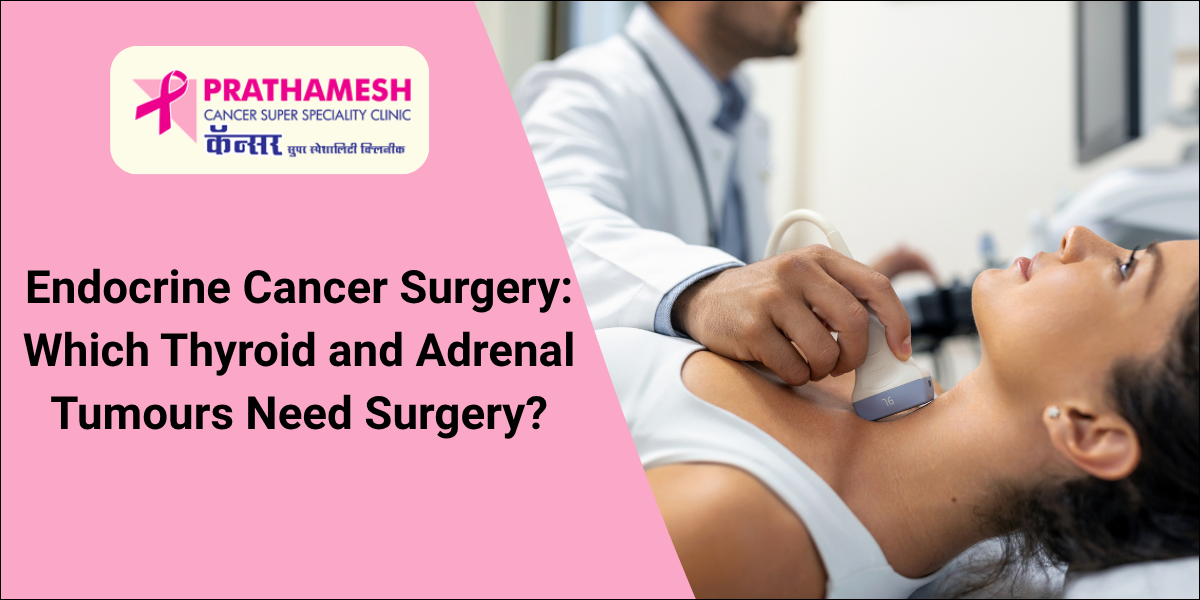
- Imaging shows concerning features. Ultrasound may show irregular borders, microcalcifications, abnormal lymph nodes, or other worrying signs.
- The nodule is large or growing. A large nodule can cause swallowing difficulty, voice change, or a visible neck swelling, even if it is benign.
- Hormone overproduction needs surgical control when medicines or other options are not suitable.
- Lymph nodes appear involved, so neck node surgery may be planned with thyroid removal.
Common operations include lobectomy (one side) and total thyroidectomy (whole gland), chosen by type and extent of disease.
Not every nodule needs an operation. Many are monitored with ultrasound and follow-up. Surgery is based on risk, not fear. For related reading, see whether thyroid cancer spreads quickly. Outcomes vary by cancer type, stage, and health.
Adrenal Tumours: When Is Surgery Needed?
The adrenal glands sit on top of each kidney and help manage stress response, blood pressure, salt balance, and metabolism. Tumours are often found by chance on CT or MRI (incidentalomas). Not every mass needs removal. Doctors usually ask: Is it producing excess hormones? Could it be cancer? Is it large or growing?
Adrenal situations where surgery is often considered
Adrenalectomy (removal of one or both adrenal glands, depending on the case) may be advised when:
- The tumour makes excess hormones, after blood and urine tests (for example high cortisol, excess aldosterone, or catecholamines as in pheochromocytoma).
- Cancer is confirmed or strongly suspected based on imaging, growth pattern, or cancer history.
- Size or growth raises concern, even when hormone tests are normal.
- Symptoms relate to mass effect, after other causes are ruled out.
Before surgery for a hormone-producing adrenal tumour, blood pressure, electrolytes, and hormone levels are often stabilised with medicines.
How Surgeons Decide Between Watching and Operating
Work-up usually includes history and examination, hormone tests when needed, imaging (ultrasound, CT, MRI, or nuclear scans), and FNAC or biopsy for many thyroid nodules. Adrenal biopsy is used more selectively.
Your surgeon explains risks and benefits of surgery versus observation. Thyroid surgery risks can include bleeding, infection, voice change (recurrent laryngeal nerve), and low calcium if the parathyroids are affected. Adrenal risks depend on tumour type, hormone activity, and approach.
Where suitable, minimally invasive surgery (laparoscopic or robotic) may be considered, depending on tumour size, location, prior operations, and cancer features. Open surgery remains appropriate for some complex cases. Thyroid surgery also overlaps with head and neck cancer surgery when lymph nodes or nearby structures are involved.
What Recovery May Look Like
After thyroid surgery, many patients stay in hospital briefly. Neck discomfort, temporary voice change, and tiredness are possible. After total thyroidectomy, lifelong thyroid hormone replacement is usually needed. Calcium may be checked. Your team guides wound care, activity, and pathology follow-up.
After adrenal surgery, recovery depends on whether one or both glands were removed, open versus laparoscopic approach, and hormone adjustment afterward. Blood pressure and steroid plans are reviewed carefully when cortisol-producing tumours or both adrenals are involved.
Return to work and exercise is gradual. Report fever, increasing pain, wound problems, severe headache, uncontrolled blood pressure, mouth or hand tingling, or breathing difficulty promptly.
Frequently Asked Questions About Endocrine Cancer Surgery
Does every thyroid nodule need surgery?
No. Many nodules are benign and can be watched. Surgery is considered when biopsy, imaging, size, growth, symptoms, or hormones suggest removal is safer than observation.
Can adrenal tumours be left alone?
Yes. Selected small, non-functioning incidentalomas with reassuring imaging may be monitored. Hormone-producing, suspicious, or many larger or growing masses more often need surgery after specialist review.
Is endocrine cancer surgery the same as chemotherapy?
No. Surgery removes tumour tissue. Other treatments may be added later for some cancers, based on pathology and staging.
Will I need lifelong medicines after thyroid removal?
After total thyroidectomy, most people need lifelong thyroid hormone tablets. After one-sided removal, some still need support if the remaining lobe cannot meet body needs.
How do I prepare for adrenal surgery if hormones are high?
Preparation may include medicines for blood pressure and heart rate, electrolyte correction, and sometimes steroid cover. Never stop prescribed medicines on your own.
Are laparoscopic or robotic approaches always possible?
Not always. They can suit many adrenalectomies and selected cases, but size, invasion, prior surgery, and patient factors matter.
When should I see a cancer surgeon in Pune?
Seek review for a confirmed or suspected thyroid or adrenal tumour, abnormal hormone results, a concerning neck lump, adrenal findings with high blood pressure, or a second opinion before surgery.
Talk to Dr. Ashish Pokharkar About Endocrine Cancer Surgery
If you need clarity on whether a thyroid or adrenal tumour requires surgery, consult Dr. Ashish Pokharkar, surgical oncologist (MBBS, MS, MCh Surgical Oncology, FIAGES, FALS). He has 22+ years of experience, trained at BJ Medical College and Sassoon Hospital, Pune, and completed MCh plus a fellowship in minimally invasive and robotic oncosurgery at Tata Memorial Hospital, Mumbai. He practices at Prathamesh ENT & Cancer Hospital, Moshi, Pune.
Clinic details
- Clinic: Prathamesh ENT & Cancer Hospital (2nd floor)
- Address: Pune-Nashik Highway, near Janjira Hotel, Kendriya Vihar Road, Sector Number 4, Moshi, Pune, Maharashtra 412105
- Phone: +91 9765395875
- Hours: Monday-Saturday 9:00 AM-12:00 PM and 7:00 PM-9:00 PM; Sunday closed
Bring prior imaging, hormone tests, and biopsy results. Contact the clinic to book a consultation.
